When it comes down to it, all stories—even purely fictional ones—are based in some kernel of truth. Writers, whether they’re novelists, short story authors, or screenwriters, draw inspiration from the world around them, their own lives, and the lives of people they know or meet or read about. Sometimes they want to write about things that happen in real life as accurately as possible, to document, understand, and process them, while other times the inspiration is enough to engage their imaginations and let a whole new story emerge.
Yet there’s no doubt the marketing term “based on a true story” has an undeniable pull for moviegoers, especially in the horror genre. After all, isn’t there something morbidly fascinating about the idea that the terrors we’re witnessing onscreen—whether it’s the rampage of a seemingly unstoppable serial killer or the manifestations of a supernatural entity—actually occurred?
That’s where, however, the edges get blurry. Whether you believe in their veracity or not, movies like The Amityville Horror purport to recreate the actual events that happened to the actual people. On the other hand, there have been plenty of instances where studios have marketed horror titles—including some classics—as being based on true events. In many instances, however, those stories are almost wholly fictional, taking the barest inspiration from the source and spinning it out into a whole new scenario.
Here are some examples of what we’re talking about. Whatever claim on the truth these movies may have, it’s a slim or even non-existent one at best. The truth is out there… just not in these films.
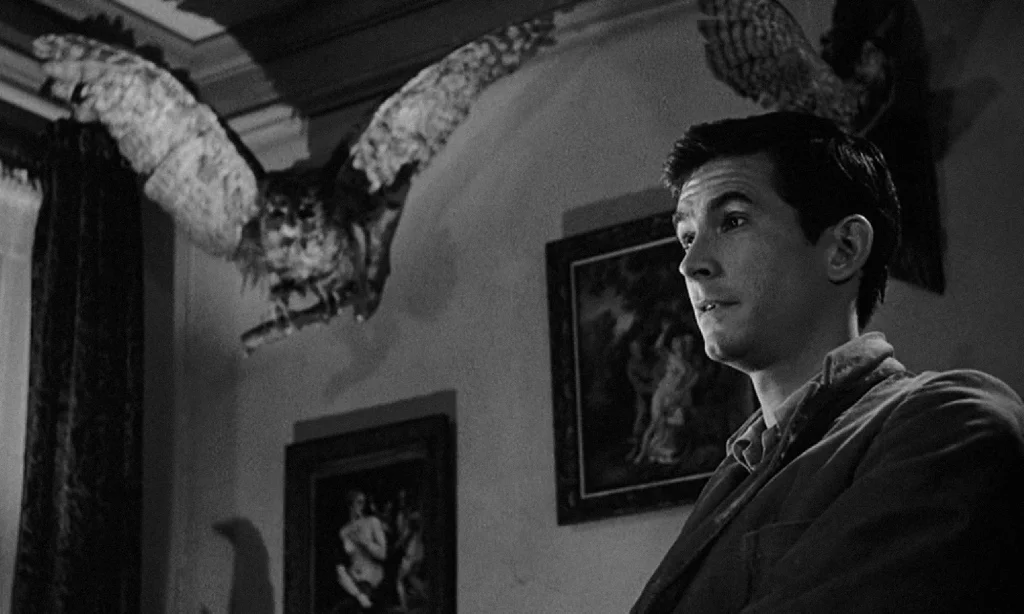
Psycho (1960)
Although the marketing for Psycho when it first came out was based more around Alfred Hitchcock’s insistence that people arrive before the start of the film and that critics didn’t see it before the general public, the legend around the film later incorporated the idea that it was based on a true story: that of murderer Ed Gein. In fact, Robert Bloch, who wrote the 1959 novel Psycho on which the film was based, actually lived around 35 miles from the house in which Gein committed his ghastly crimes.
But while Gein did kill and mutilate women (he was convicted of two known murders), worshipped his dead mother, and dressed in women’s clothing in an attempt to “become” his mother, Bloch only knew about the killings and did not find out until years later how closely Gein’s own motivations and psychosis resembled that of his fictional creation, Norman Bates. Bloch’s understanding of the dark side of human nature—the basis for so much of his classic horror fiction—coincidentally lined up with real life. Nonetheless, film classes to this day will tell you it’s based on true events.
The Exorcist (1973)
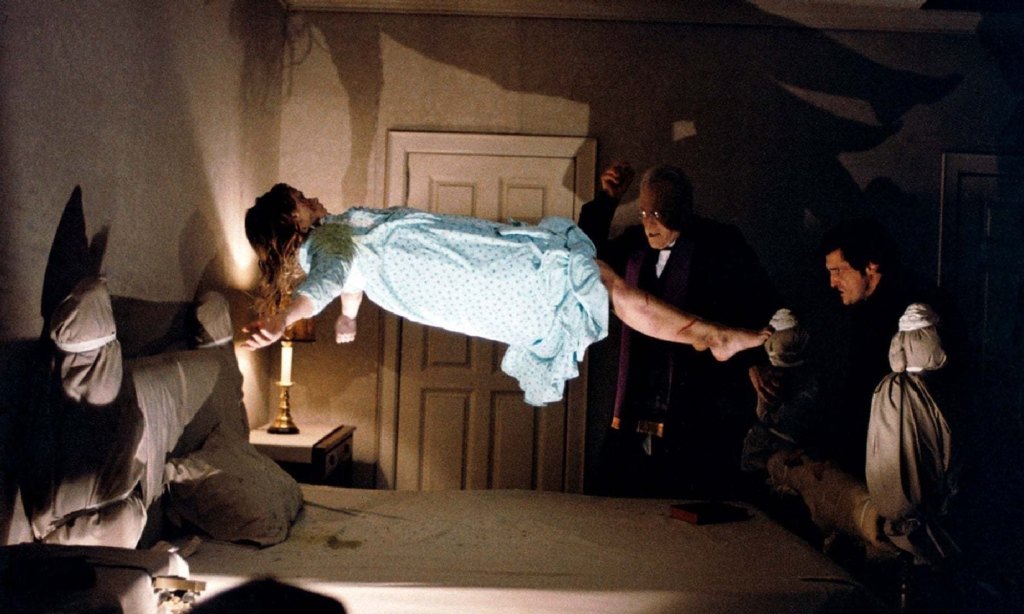
The greatest horror movie of all time was not a recreation of a true story, but the plot of William Peter Blatty’s novel, and the landmark film based on it, was loosely inspired by a real-life case of an alleged demonic possession that took place in 1949. Blatty read about the case as a college student, studying including newspaper accounts about the boy’s alleged possession and two exorcisms—the boy (“Roland Doe”) speaking in a guttural voice, using Latin, having words appear on his skin, causing furniture and objects in his house to move on their own—were incorporated into The Exorcist.
Yet there is a lot of daylight from the alleged real events and what Blatty incorporated into first a novel and then a film, both titled The Exorcist. First of all, the writer of course changed the gender of his victim. But then the setting also moved from Maryland to where he went to school in Georgetown; Blatty also created every other major character and plot point on his own, turning the possessed child into the daughter of a famous movie star. Their brush with evil also spectacularly leads to the death of three people, including the two priests exorcising her, the younger of which martyrs himself by tossing his body out a window in a heroic, cinematic, and entirely fictional moment.
In the decades since the 1949 exorcism was first reported, lack of direct evidence of possession and increasing belief that the boy—later identified as retired NASA engineer Ronald Edwin Hunkeler, who died in 2020 at the age of 86—simply suffered from mental illness debunked much of the initial reporting. But we still got one hell (so to speak) of a movie out of it.
The Entity (1982)
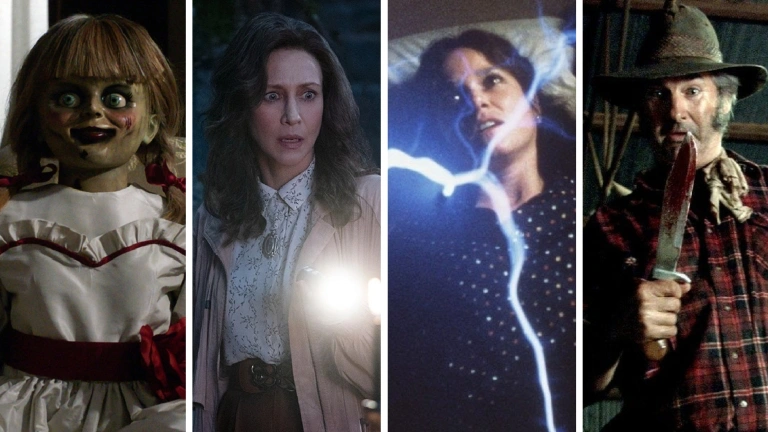
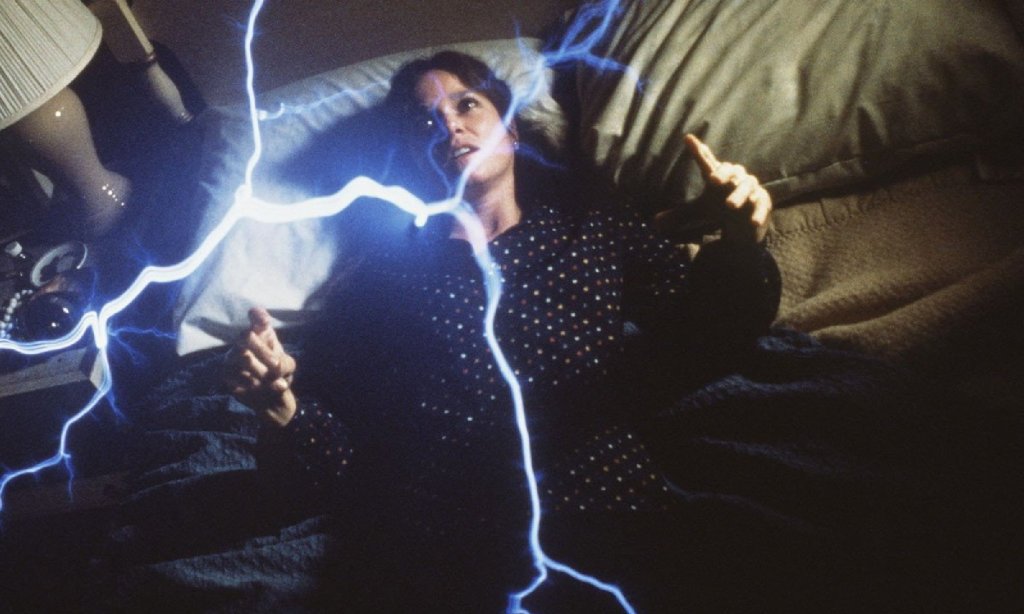
Based on a novel by Frank De Felitta (Audrey Rose), who also penned the script, and directed by Sidney J. Furie (Superman IV: The Quest for Peace), this 1982 film stars Barbara Hershey as a single mother who is repeatedly sexually assaulted in her home and elsewhere by an invisible demonic presence. Depending on your point of view, the film is either exploitative trash or a metaphor for female victimhood (all the men in the movie treat the Hershey character as either unstable or as a test subject), but bizarre as it is, the story was inspired by a real person.
In 1974, Doris Bither contacted paranormal investigators to allege that she had been raped by three supernatural entities at her home in Culver City, California. While the investigators claimed to witness some poltergeist activity at the home, Bither’s claims of assault were never proven. Her reliability was also called into question by a history of childhood trauma, drug, and alcohol abuse, and the fact the apartment she and her four children were illegally inhabiting was in a state of disrepair. While the basic scenario formed the basis for The Entity, much of what happens in the movie—including a climactic experiment in which the presence is frozen in a block of ice—was made up.

Wolf Creek (2005)
Director Greg McLean’s 2005 shocker about three backpackers who are captured by a viciously sadistic serial killer named Nick Taylor (played with unrelenting intensity by John Jarratt) remains one of the most bracing horror movies of its era, thanks mostly to its nearly unbearable violence and the bleak, terrifying nature of its story.
It was also vaguely marketed as being based on true events, and in fact McLean was loosely inspired by Australia’s infamous “backpacker murders,” in which a man named Ivan Milat was found guilty of killing seven backpackers between 1989 and 1993 in New South Wales. The crimes in Wolf Creek do not parallel any of the real-life murders, however, and the character of Nick Taylor is not brought to justice. Ivan Milat, meanwhile, died in prison in 2019 while serving seven consecutive life sentences for his killings.
The Annabelle Trilogy (2014-2019)
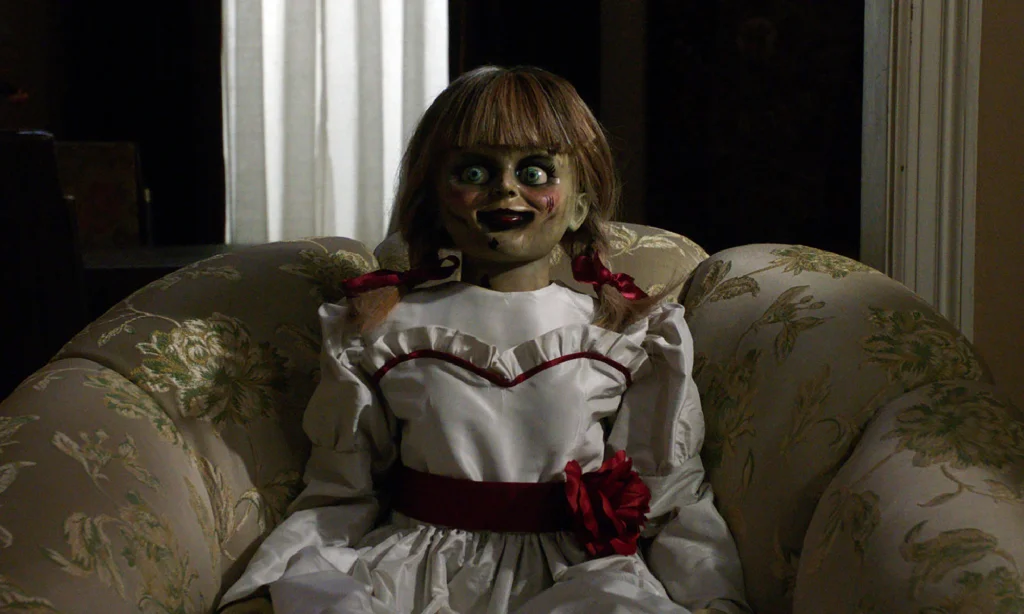
Ah, Ed and Lorraine Warren. Self-proclaimed paranormal investigators, as well as a psychic (Lorraine) and a demonologist (Ed), the couple alleged that they investigated thousands of cases of hauntings, possessions, and so on. And almost all of their work may have been bunk, but they certainly left us plenty of fodder for an entire horror cinematic universe. Aside from Ed and Lorraine themselves, the most famous cast member of the so-called Conjuring Universe may be Annabelle, one of the creepiest dolls to ever spook moviegoers.
While the real toy—a Raggedy Ann doll allegedly haunted by the spirit of a young girl named Annabelle, or at least a demon who claimed that name—has been kept locked in a display case by the Warrens since 1970 in their Connecticut home/museum, her fictional counterpart has starred in no less than three movies of her own, while also showing up in the Conjuring films and even DC entries like Aquaman and Shazam! as an inside joke! Although the films play up the fact that there is a real Annabelle doll, almost none of the events involving her in any of the movies have any basis in truth. In fact, she’s not even a Raggedy Ann doll in the films; her appearance was changed to avoid legal trouble.
So while there was a doll who allegedly claimed its name was Annabelle that haunted some nursing students in the 1960s (aka the opening sequence of The Conjuring), it never teamed up with a witch, broke free, or unleashed a werewolf (Annabelle Comes Home)!
The Conjuring: The Devil Made Me Do It (2021)
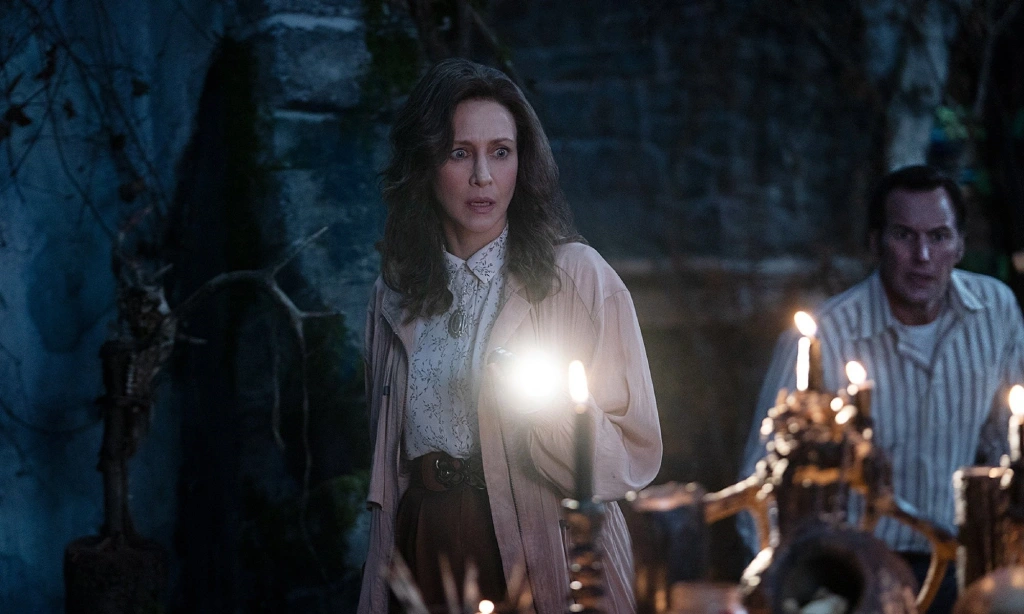
We mentioned Ed and Lorraine Warren up above in relation to the Annabelle movies, but we can’t forget their own cinematic adventures either in the form of the three Conjuring movies. The only thing is, the first two in the series not only claim to be based on true events (which they are, although what actually happened is, of course, a subject of speculation), but do take some pains to recreate a number of real-life characters and incidents from the hauntings themselves.
The same can’t be said about the third and weakest entry in the series, The Conjuring: The Devil Made Me Do It. Although the movie includes the actual case of Arne Cheyenne Johnson, who tried to use demonic possession as a defense in his 1981 trial for the killing of his landlord, as narrative bookends for its story, most of the rest of the film is complete hokum created out of thin air. So the s tuff involving an occultist, a cult, ancient rituals, and demonic visions? Never happened. But since the Warrens (now both deceased) have untold numbers of case files that could be adapted, with a fourth Conjuring film reportedly in development, we can probably expect more such movies—“based on true events”—coming to your local multiplex in the years ahead. After all, truth is stranger than fiction… especially when you make it up.